Thursday, 1 December 2011

Rex Stout, the Slim King


Rex Stout was a thin, wiry man, not especially tall. But if you want his second name to be as appropriate as his first, you just need to think of his great detective, Nero Wolfe. If Rex is the King (as he is), then Wolfe is the fat, orchid loving, home loving, word loving gourmet who, says his sidekick Archie Goodwin, is the greatest detective in the world.

I first heard of Nero Wolfe when, aged about thirteen, I was playing a game of hangman during History class with my friend Anne Sterling. I had been winning consistently, until Anne came up with a name I’d never heard of before. ‘Nero Wolfe? Who’s he?’ I asked indignantly. I’d certainly started something. I heard all about Wolfe for the rest of the class, and the next day Anne brought me in Before Midnight, so that I could borrow it and see for myself.  Since then I haven’t looked back. (See how much we learn in school!)

I suppose Before Midnight is still one of my favourite Rex Stout’s. The title alone, with its evocative suggestion of thrills and danger, makes it attractive to any thriller reader. Then it has the added pleasure of a set of word puzzles within the overall mystery, always a great bonus. (Think of the cipher letter in Dorothy L. Sayers’ Have his Carcase, for instance.) Before Midnight centres round a perfume competition, where the competitors have to identify the famous women referred to in twenty verses, one issued each week; with prize money of one million dollars.

                        ‘Though Caesar fought to give me power
And I had Antony in my grasp,
My bosom, in the fatal hour,
Welcomed the fatal asp,’

Archie quotes, and goes on to say, ‘Of course that was pie…’

And since it’s naturally ‘pie’ (easy) for all you guys, I won’t annoy you by giving you the answer.  But that was the first verse, and they got much harder quickly. A delightful book, and not only because of its plot. The real pleasure of Rex Stout’s Nero Wolfe books lies in the atmosphere – thirties, forties, and onwards, in New York – and in the two main characters, Wolfe and Archie. Over the series of books, these two characters develop, and Rex Stout’s readers grow to rejoice in them and in their wit, their give-and-take discussions, and their occasional rows. They become our friends, and the type of friends, at that, whom we don’t often find.

Nero Wolfe himself is an interesting character, very enjoyable to read about. He never leaves his house on business – he has Archie for that. He is well read and his table talk is witty and clever. He is straightforwardly out for money, but at the same time he draws a line – he won't cheat anyone or go back on his word. He's a character who I love to read about. But Archie is the real centre of the books, both in the relationship we as readers build up with him and in the actual space he takes up in each story.

On my weekly bus journeys, during my teenage years, into the centre of Belfast to spend my pocket money, I began to look out for Rex Stout books, and before long I’d collected every one which was available at that time in paperback.  Recently I returned to the chase. A shop had opened in Dublin called Murder Ink which sold imported American detective stories, and on a trip to Dublin I acquired several. After that I added a few every time I was there.  I found that I already owned most of the full-length books, but that didn’t matter. Rex Stout wrote a great number of ‘long shorts,’ three of which made up a normal length book, and I became an addict of these just as much as of his longer work. In fact, Not Quite Dead and Black Orchids are among my current favourites.  Moving on to Amazon second hand sellers, I worked at completing my collection, and recently acquired Where There’s A Will. I now have all the Nero Wolfe books. Rex Stout wrote between 60 and 70 books. Some of these are his earlier romantic fiction – not quite so good, but still readable – but the vast majority are detective stories, whether in the Wolfe series or not.   He also wrote about another detective called Fox, and a female, Dol Bonner, so if anyone is looking for a Christmas present for me, the few books about those detectives would be very acceptable!


And talking about his female detective, Rex Stout is a strange mixture in his attitude to women. In the Dol Bonner books, and in Mountain Cats and Red Threads (non Wolfe books) where the puzzle is solved by a woman, he seems to support women as being intelligent and equal to men.  But Wolfe himself hates women – mostly – and Archie starts off in the early books, like Fer-de-Lance, as a complete male chauvinist pig; and even in the last book, A Family Affair, he is very opposed to the feminist character, Lucile Ducos.

It’s true that he develops during the course of the books, especially after meeting Lily Rowen, into a rather less chauvinistic person. Lily Rowan is an excellent character, and under her influence Archie stops thinking of women as sex objects inferior to men in every other way. Archie first meets Lily in Some Buried Caesar (one of the best books, in my opinion) when he hurtles over a high fence to escape from a bull, and hears a voice greeting him, ‘Bravo, Escamillo!’ (Escamillo was a well known bull fighter in those days.) Archie is naturally peeved with anyone who could make a joke like that when he had so narrowly escaped being killed.   Lily, however, can handle Archie with great ease, and over the course of the series takes complete control of him. But he still has his flaws.

So why do I like Archie Goodwin so much, and enjoy reading about him? Hard to say. Archie is the suave, sophisticated young man typical of the twenties/thirties, Fred Astaire or Humphrey Bogart, witty, debonair, brave and cool,but soft hearted and chivalrous, attractive to women, and admirable in nearly every way. His attitude to women is, alas, typical of his era, when in films the hero often spanked the heroine with a hairbrush with no sexual innuendo involved, except inasmuch as it showed that he could deal with her. Perhaps my enjoyment of Archie reflects a flaw in me. Well, if it does, I don’t care – I still like him a lot and rereading these books is still one of my favourite relaxations.

Excuse me – I want to go and finish rereading Champagne For One.

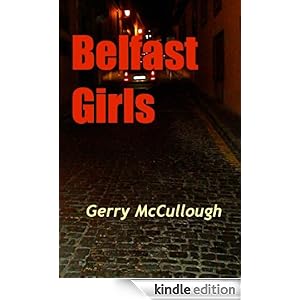
(If you’d like to read any of my own books, there’s Belfast Girls, a mixture of genres including romance and thriller, which has been selling quite well,

http://www.amazon.com/Belfast-Girls-ebook/dp/B004DNWS3W

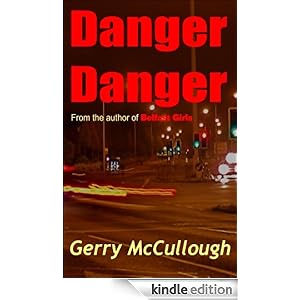
and my new one, Danger Danger, a more straightforward Irish romantic thriller which you can buy at these links.


See you soon!


Tuesday, 15 November 2011

Anne R. Allen's Great Game


Well, Danger Danger is definitely out now, and starting to sell, I'm glad to see. After the success of Belfast Girls, I had gathered from lots of different sources that a second book would not only do well in itself (all the readers of Belfast Girls would be eager to buy my second book) but that its appearance would equally give Belfast Girls a further boost.  But for the first couple of weeks I was beginning to really doubt the truth of this.

However, Danger Danger has by now picked up a fair number of sales, as well as 7 glowing reviews on Amazon.com (more would be great, please, if you've read it!) and I think I'm beginning to see the dogma come true– I hope!

Meanwhile, I've been reading lots of books by other new writers in the Indie category, and since this time on my blog it's the turn of 'new discoveries' rather than 'old favourites' I'm glad to introduce you to a really good writer whose work I've been really enjoying  – Anne R. Allen.

I’ve come across Anne’s name quite a few times in my Internet browsing, firstly as the writer of several interesting comments on Mark Williams’ blog, and then as a blogger in her own right, well worth following.  But it was comparatively recently that I actually read any of her books. And I wished I’d been a bit quicker off the mark, because Anne R. Allen is definitely someone whose books are very much my sort of thing.

I began with The Gatsby Game.  I always expect good things from a writer who enjoys the same books as me, and the fact that Scott Fitzgerald, one of the best modern American writers (streets ahead of Hemingway, in my view) is so central to the book was an immediate plus point.  Then I found Nicky, the heroine, reading Mary Stewart’s The Crystal Cave, (I've written enthusiastically about the great Mary Stewart, a model for all writers of romantic thrillers, like me, in an earlier blog post here, How Fleeting is Fame) and later  came across her reading Josephine Tey, author of The Daughter of Time and a too small number of other equally excellent bookswhose detective stories are among my most regularly re-read.

 (Josephine Tey was also well known for the plays she wrote under the name of Gordon Daviot, but to me her detective stories are her finest achievement. Mary Stewart mentions Tey's book Brat Farrar, the story of an impersonation, in The Ivy Tree as the model on which the impersonation in that book was based, and Agatha Christie is said to have parodied Tey in the character 'Antony Astor' in The Three Act Tragedy.  I might write a post about her sometime soon.)

That settled it. In Anne R. Allen I’d found someone well worth exploring.

The central male character, Alistair – it might not be appropriate to call him the hero – has based his life on Jay Gatsby, the character from Fitzgerald’s The Great Gatsby who invented a background and life for himself and managed to convince most people that it was real until the very end of the book; typifying the American people and the American Dream. The Gatsby Game is a classic detective story, with a crime whose solution is not clear until the last pages, but it is a lot more. The analysis of Alistair’s character, gradually revealed as Nicky understands him more and more, is subtly and successfully contrived.  Alistair is, I suppose, a con man, but like Nicky we can’t help liking him and feeling sorry for him. He is, in fact, a tragic figure, like Gatsby himself.

The actual plot of the book, based as it is on a real life scandal in Hollywood circles back in the seventies, with the names changed, is told with a realism which takes us right into the lives of its characters. The court scene, where Nicky finds herself accused of murder, is alarming and upsetting, and when Nicky only escapes being tried by calling for the intervention of her wealthy and powerful family, it seems a fair response to the unfair victimisation of her as, apparently, only the Nanny. (She is working as a nanny as a holiday job while at university.)  Wealth and power should not be able to interfere with the course of justice – but then the police should not try to pin a murder on someone because they seem poor and helpless. This scathing denouncement of American justice is presented with irony and wit, and is never heavy handed.

As Nicky escapes on the plane east, back to her real life, the solution of the mystery suddenly comes to her, as she thinks back to her first meeting with Alistair and the things which happened since then. And so Anne R. Allen takes us back through Nicky’s memories, keeping the solution quiet until the right moment. There are twists and turns in plenty in store for us even up until the last chapters, an added bonus in this very enjoyable and page turning book.

Particularly in this part of the book, where we go back to Nicky's meeting with Alistair, Allen introduces an authentic atmosphere which we recognise as typical of Fitzgerald – the wealthy American upper class, with their empty lives and concealed unhappiness.  The mass of detail and the skilfully drawn characters as well as the amusing incidents, such as Alistair's theft of the expensive wine, seem to belong to a much earlier period than the sixties and seventies, and underline the resemblance of the Roaring Twenties and the Thirties to the swinging Sixties and the still frivolous Seventies with, in each case, their undercurrent of economic depression and misery. 

To me, a book needs three things to make me want to read it to the end, rather than deciding after a few chapters that life’s too short to waste time reading this.  The first is a main character or characters whom I can like, relate to, and get to know, just like Nicky. The second is an interesting plot.  The third is an atmosphere which I can enjoy. Anne R. Allen provides all three in abundance. I intend to read my way now through her other books, in the confidence that I’ve added another favourite writer to my list.

You can buy The Gatsby Game here:

http://www.amazon.com/The-Gatsby-Game-ebook/dp/B005STMRYA

http://www.amazon.co.uk/The-Gatsby-Game-ebook/dp/B005STMRYA

and Anne's excellent blog is here:

http://annerallen.blogspot.com/

And of course if you'd like to try some of my own writing (and why not?) you can buy Belfast Girls here:

http://www.amazon.co.uk/Belfast-Girls-ebook/dp/B004DNWS3W

http://www.amazon.com/Belfast-Girls-ebook/dp/B004DNWS3W

and Danger Danger here:

http://www.amazon.com/Danger-ebook/dp/B005W7TUQQ

http://www.amazon.co.uk/Danger-ebook/dp/B005W7TUQQ

See you soon!


Tuesday, 25 October 2011

The Other Agatha: Mary Westmacott


I meant to write this post, the second about Agatha Christie, last week, but I’ve been very busy and excited with the publication of my new book, Danger Danger, an Irish romance-suspense about twin sisters, separated at birth; and about the strange way in which, in spite of their very different circumstances, their lives take parallel courses, hurling them both into danger, until they finally meet.


Danger Danger is now available on both Kindles, in paperback on Amazon.com, and in paperback for pre-order on Amazon.co.uk, so things are really happening for me.  Belfast Girls is continuing to sell well, and is mostly staying in the top 10 for Women’s Literary Fiction on Amazon; so I’ve been very busy with all this.
But at last I’ve carved out a space to write this blog, which is on a subject I find both engrossing and important.

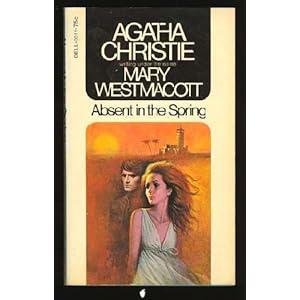
How many of Agatha Christie’s millions of fans know that she also wrote six books, labelled as ‘romance’ by her publisher, and given romantic looking covers, unfortunately, but more appropriately coming under the genre heading of ‘literary’, under the name of Mary Westmacott? Okay, quite a few, I’m sure. But for a long time, at her publisher’s insistence, this was one of those best-kept secrets. When, as a young writer, quite well established as the best selling creator of Hercule Poirot, Agatha turned up one day at her publisher’s office with her new book, and it wasn’t a Poirot mystery, there was consternation. This would never do! Her fans already expected a certain type of book from her. They wouldn’t buy this sort of thing; or if they did, there would be a knock on effect on her next thriller, which would probably sell abysmally, since fans would no longer know what to expect.

Agatha Christie argued her case, but the most she could achieve was publication provided she took a non-de-plume, and continued to write only detective stories under the Christie name which she had made famous. So for years she wrote the occasional Mary Westmacott as the spirit moved her, and for quite a long time no one, except a few friends who guessed, knew that she was their author.

This has been a common attitude with publishers for the whole of the last century. It’s only now, with the e-book revolution, that writers have the freedom to create whatever type of book they choose, with no one to force them to stay in one genre, or remain anonymous; and many of them are seizing the opportunity, with notable success.

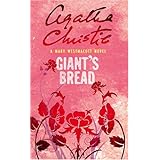
I first heard of the Mary Westmacott books when I’d already been reading, and loving, Agatha Christie for many years. They weren’t easy to get hold of. I found one, Giant’s Bread, in my local library and enjoyed it a lot.  I found that Christie had brought to it all the skills and the ability to give pleasure of her normal detective stories, plus an added freedom to explore character and a new depth of subject matter.  Agatha Christie, in my opinion, draws her characters excellently, and doesn’t allow herself to be limited too much by the plot. But undoubtedly there’s an extra something in her Westmacott books which makes them even more special.  The writing skill, the clarity of style and the page turning ability, are still there, and the plot, although so different, is handled with all the skill one expects; but these books are about people and their lives and how their characters develop.

It was some time before I was able to find the other Westmacott books. Giant’s Bread was the first I bought, as well as the first I read, but not long after that the six were published in two volumes. I bought the first, but, alas, the second must have gone out of print very quickly, because I couldn’t find it when I tried to buy it at a later date. However, I managed to pick up the others as individual books second hand.

One of the things I would say about these books is that Christie, perhaps because of the non-de-plume, has used material from her own life more freely here than in her detective stories. (The exception to this is The Five Little Pigs, where she used the story of her first marriage, even setting the book at the same time, sixteen years previously, as her own divorce; but rewrote history to make the story turn out as she would, at the time, have wanted it to. If you haven’t read it, I won’t spoil it for you. But if you have, and have also read her Autobiography, see if you agree with me.)

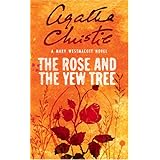
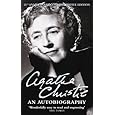
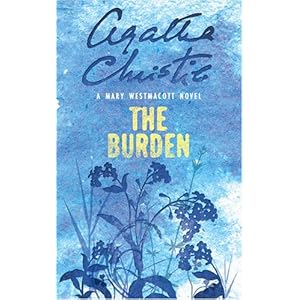
Any reader of her Autobiography (one of my favourite books) will see at once that her own wartime hospital experience is used not just in Giant’s Bread but also in The Burden; and her disastrous first marriage appears in both The Burden and The Unfinished Portrait.  It’s interesting, too, to see that she occasionally repeated ideas used in the detective stories. For example, The Rose and the Yew Tree has plot elements which she also used, with a very different outcome, in The Moving Finger; and Destination Unknown and The Unfinished Portrait also have striking plot similarities. Christie fans will undoubtedly notice other doubles, such as the Mr Quinn story The Man From the Sea and, again, The Unfinished Portrait; and the story of Joan’s daughter in Absent in the Spring and that of Hastings’ daughter in Curtain.


Agatha Christie herself thought Absent in the Spring was the one of her books which she was most completely satisfied with, and no wonder. Slightly shorter than most of her work, this gem deserves more recognition. The main character, Joan, is portrayed with a subtlety which allows us to understand her more and more fully without the author obtruding on her story with forced explanations.  Joan’s experiences in the desert, compared as they are to Christ’s, are moving and full of depth. The ending, which Christie tells us she wrote before any of the rest of the book and was able to leave completely unchanged when she reached it, is both real and saddening.

These books, as I’ve already said, have a depth of theme and a realism which she was able to allow herself when writing more fully about her characters rather than working to a plot. My own favourite is The Burden, an amazingly important examination of the more serious realities of life. The Rose and the Yew Tree is a close runner-up, with Absent in the Spring and Giant’s Bread serious contenders. In fact, all six of the books should have earned Agatha Christie a position as one of the best literary writers of the 20th century, and would undoubtedly have done so if her position as ‘The Queen of Crime’ had not also been so well established. Being so good at two such different types of writing isn’t always the best thing for a writer’s reputation!

If you like Agatha Christie, and haven’t as yet tried Mary Westmacott, you can get them for buttons in the online second hand shops.  You’ll find they have all the elements which make the detective stories so readable and enjoyable, plus a little bit more. Don’t miss out!

And by the way, if you'd like to buy Belfast Girls or Danger Danger, here are some links for those:

http://www.amazon.com/Belfast-Girls-ebook/dp/B004DNWS3W


http://www.amazon.co.uk/Danger-ebook/dp/B005W7TUQQ

See you soon!


Thursday, 6 October 2011

A Completely Unbiased View (for those who want to know about the future).

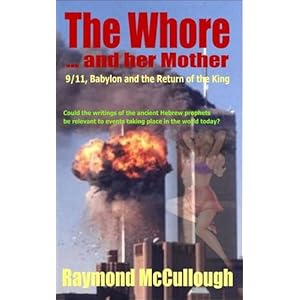
The Whore and her Mother:
9/11, Babylon and the Return of the King
A while ago I looked at Stacey Danson's Empty Chairs, and introduced it by saying that for me to review it was out of the box since this type of book is far removed from my usual reading. 

Now I'm going to do it again. This book is not one I would normally write about. My favourite books, as regular readers of this blog will know, are mostly light and entertaining.  So in writing about The Whore and Her Mother, I'm going out of my usual line. But I am serious in saying that this is one of the most important books published for some time. In a day when Harold Camping's forecasts are turning the subject of the last days into a laughing stalk, here is an intelligent examination of a subject of major interest to everyone, which makes no wild guesses, but works out its ideas logically and with a building excitement.

As my title suggests, I can't help being a bit prejudiced in this book's favour (it is written by my husband, after all). I begin by, as the politicians say, declaring an interest.  But I would genuinely like to encourage everyone out there to get hold of it and read it.  You'll be amazed.

Raymond McCullough, from County Down, has been writing successfully for years. He began around twenty years ago by having numerous paid articles published in computer magazines, while earning a living as a college lecturer; to having his thoughts on Ireland published by the Irish Times and the Presbyterian Herald; and to self publishing a book, 'Ireland – Now the Good News', excerpts from his magazine Bread.  

Bread, which he had been publishing for seven years by that time, went to nearly every possible type of denomination in Ireland, and all over the island (from Catholic to Free Presbyterian, from Cork to Coleraine, and Galway to Dublin) at the height of the troubles.  The mediating influence of this magazine certainly contributed more than can be quantified to the eventual ceasefires.

Celtic Roots Radio
Since those days, he has mainly concentrated on radio and podcasts (Celtic Roots Radio currently has over 14,000 downloads a month) but recent developments in the world around us, together with the serious urging of various friends, have now decided him to complete, and publish, the book he has been putting together for some time, with the striking title, 'The Whore and her Mother.'

This book takes a long hard look at the forecasts of the Hebrew prophets (respected by at least three of the major world religions) and it attempts, in the light of current events, to work out how accurate they have been up until now, how far we can therefore trust their future predictions, and how we should interpret their meaning.

At a time when the devastating events of recent years are forcing even the completely unreligious to describe  them as 'apocalyptic,' and those who have some belief to ask urgent questions, here is a book which makes a serious effort to come to terms with the question of what will happen next, and how close we might be to the end of this world as we know it.

Unlike others, Raymond McCullough makes no attempt to prophesy himself, but lucidly, straightforwardly, with academic precision, but also with page turning excitement, puts the pieces of the jigsaw into some sort of order, and gives us his best guess as to what we should now expect, while inviting us not to swallow his ideas, but to read up his references and judge for ourselves.

The list of books consulted is impressive. From Noam Chomsky to detailed examinations of the greed and globalisation on which Western economy is based, such as Falling off the Edge, from Michael Moore to the Hebrew prophets, this book looks at every angle and goes into it thoroughly, in depth, but in a way which continually grips, in working out its case.

The Whore and her Mother is a book which no one should miss. Buy it on Amazon Kindle for £2.99, or in paperback, at the links below.

E-book:

Paperback:

Read first 8 chapters FREE on Authonomy.com:
http://www.authonomy.com/books/13229/the-whore-and-her-mother/

A Wee Taste a' Craic
Recently, on a completely different track, Raymond has put together the 'craic' (what he often refers to as 'the waffly bits' – in other words the anecdotes) from his first twenty-five podcasts, into book form; and this book, A Wee Taste a' Craic, will be out shortly.  It's a short, light-hearted look at all things Irish, for Irish lovers worldwide – very different from The Whore and Her Mother!  The many fans of his podcasts and radio show will love it.  It can be pre-ordered here:
Celtic Roots Craic (blog):

Thursday, 29 September 2011

The Marvellous Mrs Christie

When I was quite a young child (eight at the most) one of the delights of my life was to sneak quietly into the 'attic', i.e. the room next to my third floor bedroom in our terrace house in Belfast, and explore the piles of stuff kept there for want of space elsewhere. Some of the most exciting things were the books which were by no means intended to be thrown out, but which just didn't have a current home in one of the bookcases downstairs. On a red letter day, I curiously picked up one of my mother's books, a fat dark green hardback (I can still visualise it clearly) with the intriguing title, Partners in Crime. This was my first introduction to one of my all time favourite writers, Agatha Christie.

Partners in Crime is a lovely book. It is a set of short stories featuring the young couple Tommy and Tuppence who first appeared in Christie's second book, The Secret Adversary. Taking over a detective agency at the suggestion of Tommy's boss in the Secret Service, with the aim of tracking down the spies who are using it, Tommy and Tuppence decide that they should use the experience they've gained by reading 'every detective story that has been published in the last ten years' to solve the crimes which come their way from bona fide customers. Thus, in one story Tommy takes on the role of Sherlock Holmes, in another Father Brown, while in others Tuppence is the less well known Roger Sheringham or Mr. Fortune.  This makes for an amusing and entertaining series of stories, as well as excellent mysteries with the usual Christie twist in the tail. (Incidentally, it introduced me to a range of other writers whom I tracked down over the years and whom I still enjoy.) I particularly love the fact that the male, Tommy, and the female character, Tuppence, play equal parts in solving the various crimes.

Of course, at the age of eight or so, I didn't appreciate the skilful parodies as much as they deserved, but I was enthralled and engrossed by the stories, and fell in love with the two main characters.  I have to admit that when I reached The Man in the Mist, the Father Brown parody, I was so terrified that I dropped the book with a thud, had a series of nightmares over the following week, and didn't go back to Mrs Christie for at least another year.  But once I did, I read everything I could get my hands on, and have been steadily re-reading her ever since.

Agatha Christie is obviously best known as the creator of Hercule Poirot, and to an almost equal extent of Miss Marple.  While I love these characters and everything she's written about them, I have to confess that my own favourites amongst Christie's writing are, firstly, her various short stories; and secondly, the books where she takes a young couple as central characters.  My early experience of her may well be influencing me here!

She wrote at least as many books of this type as about either of her better known detectives. They Came To Bagdad is one of my personal favourites, but so is The Man in the Brown Suit, Why Didn't they ask Evens?, Destination Unknown, The Sittaford Mystery, The Pale Horse, etc, etc etc.   I'm tempted to include here The Moving Finger, in which, to be sure, Miss Marple eventually makes a brief appearance and solves the mystery, but which is mainly about Jerry and Megan  – a couple I really like.  The Moving Finger, incidentally, has one of Christie's cleverest plots, and one which has been copied by a number of other writers (such as Harlan Coben) because it's so good. If you don't already know what it is, I'm certainly not going to spoil it for you.

As a writer of short stories, Agatha Christie has few equals. The Mysterious Mr Quin is a book I return to probably more than any other. The originality of the main character, the excellent plots, and the touch of enchantment which runs throughout make it an experience which I want to have over and over again. The only problem with this is that I over-read it, and sometimes have to lay it aside for longer than I'd like before I can fully enjoy it again.

Then there's Parker Pine Investigates, The Hound of Death, and my favourite Miss Marple book, The Thirteen Problems.  Thirteen short stories, in which Miss Marple pits her wits against a group of clever people and consistently wins. The first six stories are about the 'Tuesday Night Club', where six people meet once a week, and each tells a story with the solution left out for the others to guess. The next six stories are similar, with a final one showing Miss Marple in action rather than sitting and thinking.

The Poirot short stories, to my mind, are not on an equal footing with these.  Poirot developed as the books went on, and it's the middle period which shows him, and Christie, at their best. Sad Cypress, for instance, is among the more enjoyable, or Five Little Pigs (one I particularly like) or The Hollow, or Taken at the Flood.  The well known Death On the Nile and Murder on the Orient Express always surprise me by how good I find them when I come back to them, for in between readings I tend to begin thinking of them as less good than they are.  Cards On The Table is one I particularly love, and I was, therefore, greatly annoyed by the TV version a few years ago which mucked up the plot something chronic!

Agatha Christie herself agreed that a book needs some changes before it can be successfully transferred to stage or film, and in fact changed the ending of the book now known as Then There Were None for the film version, re-writing it herself. However, her general opinion of people who want to change her books for this purpose can be seen in the very amusing passages of Mrs McGinty's Dead which deal with Mrs Oliver's feelings on this subject. Mrs Oliver is a very witty take-off of Christie herself, and I always love reading the books in which she plays a role. In Mrs McGinty's Dead, she is attempting to work on a stage adaptation of one of her detective stories with an opinionated young playwright who wants to completely change the age and character of her well-known and popular detective. 'Then he can't be Sven Hjerson. Just make him a Norwegian young man who's in the Resistance movement,' she says, and when the reply is that the whole idea is to have a play about Sven Hjerson, who is 'box-office', she wails that her readers know what he's like. But, she's told, that's got nothing to do with the stage! (For stage, read Television.)

As I start to write about them, I realise how many of the Poirot books I really like, as well as the other, non series, type.

I see that so far I haven't mentioned Mrs Dane Calthrop, a brilliant character who appears in The Moving Finger and in The Pale Horse, and adds considerably to the attraction of these two excellent books.  Speaking of her husband, the vicar, who has received an anonymous letter accusing him of carrying on with the school mistress, she says, 'Quite absurd, because Caleb has absolutely no taste for fornication. He never has had. So lucky, being a clergyman.'  Laugh out loud stuff, for me anyway. But Mrs Dane Calthrop is not just amusing, she's an impressive character, and no one should write about Agatha Christie without at least mentioning her.

This blog is already rather long. Much as I'm enjoying writing it, I'd better stop now. Next time I'll be writing about a new book rather than an old favourite, but after that again I plan to post Part 2 of my thoughts on Agatha Christie – this time about 'Mary Westmacott', the pseudonym she was forced to adopt when she wanted to write books which didn't fit into the detective story genre.  Hope to see you then!

Tuesday, 20 September 2011

To Infinity and Beyond Nostalgia.

Beyond Nostalgia
Have you heard of Tom Winton?

If not, this is where you do, and afterwards are properly grateful to me for the introduction, I'm quite sure.

I first 'met' Tom on Authonomy where he, like me, was slogging it out in the long battle which was supposed to lead to a publishing deal with Harper Collins. Of all the thousands (yes, literally) of books of which I read the first part on that site, Tom's Beyond Nostalgia stood out among a tiny handful of books which were ones any publisher with any sense should have grabbed. (And he was kind enough to say something similar about my own Belfast Girls.)

Belfast Girls
Tom, unlike me, didn't feel obliged to stick it out until the end, a disappointing review which, in my case, said nice things but definitely didn't offer a publishing deal unless I rewrote the book as either a romance or a thriller. Instead, he pulled out, and went on to achieve great success on YouWriteOn. Meanwhile, he found that Tim Roux of Night Publishing was only too happy to publish Beyond Nostalgia; and the sales have been in the thousands.

Beyond Nostalgia starts by going back to the sixties, when the main character, Dean, was a teenager, in New York, and the love affair which he remembered even through the happy but poverty-striken marriage of his adult years with Maddy. I don't intend to spoil the story for you, but although this book has mainly been pushed as a romance it is much, much more.  The slummy background of New York years ago is beautifully presented and springs to life from the beginning. The financial struggle of Dean and Maddy to live is realistically detailed.The characters, especially the narrator, are immediate, real, vivid. The social background, the poverty and its effect on the characters, is of major importance, and the relationship between this man and his wife is delicately and poetically drawn. The twist in the plot is gripping and page-turning.

It's no surprise that so many have wanted to read this book.

The Last American Martyr
But now Tom Winton has surpassed himself. In his new book, just out, The Last American Martyr, Tom has taken his writing 'to infinity and beyond.'  This book has all the detail, the gritty reality, the living characters, of the first, but in its theme Tom Winton plunges yet deeper again.

The main character, another Tom, has won a Nobel prize for his first and only book, which exposes the corruption and greed of the world's economy, and moves millions all over the world to rise up in protest to bring about change. But this has put Tom in fear of his life, so that he has been forced to hide out, after some horrific experiences, from his enemies in Big Business.

The brutal truth, the up close reality, of Tom Winton's writing on this very important subject, should make his book as equally influential and successful worldwide as that of his character, if there's any justice. One thinks of books like Salinger's Catcher in the Rye or Steinbeck's The Grapes of Wrath, and it's instinctive to place The Last American Martyr beside them, as one which will impact a generation.

This may seem an extreme thing to say. But to me, Tom Winton stands out as a writer to be remembered.

Already I'm looking eagerly to see what this amazing man will have for us next.

You can buy Tom's books on Amazon as either paperback or Kindle, on either the USA or the UK sites.

http://www.amazon.com/Beyond-Nostalgia-ebook/dp/B004N84VO6

http://www.amazon.com/The-Last-American-Martyr-ebook/dp/B005GFM764

Friday, 2 September 2011

How Fleeting is Fame: Mary Stewart

For the past month I've been very busy with two important things.

The first was helping to edit a book of which some of you will by now have heard – The Whore and her Mother, by Raymond McCullough.

The said Raymond is my husband, and his book, unlike mine, is an important and timely non-fiction look at the state of the world around us, in the light of the Hebrew prophecies respected by at least three of the major world religions.

Raymond, a professional writer for over twenty years, has spent a long time looking into this subject, reading works on Globalisation, etc, and forming his own conclusions. I think the book is written in a smooth, spare, easy to read style which makes its subject available to the ordinary reader, not only to the academic. I feel privileged to have been allowed to help in its editing, and I fully expect that The Whore and her Mother will make the type of worldwide impact that Michael Moore made with his writing about Columbia High.


The second hold up was my ongoing attempts to finish my novel, intended as a follow-up – though not a sequel – to Belfast Girls.

http://www.amazon.com/Belfast-Girls-ebook/dp/B004DNWS3W


Provisionally called Danger Danger, this book is more of a straight forward Romantic Suspense novel, and it's now, in turn, at the editing stage.

That means I can now get round to writing the next blog about my own favourite authors, and this time I'm concentrating on Mary Stewart.

Mary Stewart was consistently at the very top of the best seller lists both in the UK and in America during the sixties and seventies for her Romantic Suspense novels, and remained there during the eighties with her Arthurian legend series. I first read her books when I was still in my teens, picking up Madame Will You Talk from my older sister's bookshelf, devouring it eagerly, and then rushing through the other books without pause.

When she switched to The Crystal Cave, her first Arthur book (written from the viewpoint of Merlin) I was so disappointed that it was some years before I read it or the rest of the series, but when at last I got over my sulks and tried it out, I found to my delight that I was listening to the same bewitching voice, and finding the same delight in every page. Needless to say, I went on to read them all.

Mary Stewart does lots of the things writers today are advised not to do. She writes in the first person. To me, this makes the books more immediate and believable, and she is a skilful enough writer to manage her plot with apparent ease in spite of this. The only book she wrote in the third person, Thunder on the Right, while a good book, is noticeably less successful than any of her others. Again, she doesn't stick to one genre. She is credited with having invented the 'Romantic Suspense' as a new genre in itself, although I'd be surprised if she was actually the first – what about Jane Eyre, for instance? And Rebecca? – and so on? Finally, she changed genres at the height of her success. And far from damaging her (except for a few edjits like me, for a short while) this only made her more successful.

She set her romantic thrillers, often, in places which were interesting and romantic in themselves, such as Greece, the Highlands of Scotland, France, Crete, Hadrian's Wall, etc., and her heroines are intelligent, forthright and brave. Her style is full of beauty, as well as being striking, witty, and fast moving. Her heroes are real people, easy to believe in. Like most good thriller writers, her moral stance is impeccable.

Madam Will You Talk begins,'The whole affair began so very quietly,' and moves with breathless speed through murder and mayhem, to the heroine, Charity, being pursued in a frantic car chase through the middle of France down as far as Marseilles by a man she believes is a murderer; and reaches its climax with Charity turning the tables on the villain and holding him at gunpoint in his own car on another midnight drive. Page turning isn't a strong enough word to describe it.

Mary Stewart spoke in a rare interview of the readers who believed she herself must have experienced the things she wrote about, and didn't realise that a writer's skill lies in making things up. She also refused to be put in a category, as one type of writer or another, but said that she would like, if she could chose, to be known by the old description of 'storyteller.' And so she is, and a great one too.

So how is it that today so many people have never heard of her? Fame is indeed fleeting. Milton said that 'Fame is the spur' which pushes us on, not just writers but everyone who wants to achieve something with their life.

Clearly, we've got it wrong if, like Milton, we expect to have lasting fame. Okay, Shakespeare has it, but few others. Fame, like yesterday's newspaper, doesn't last for long. Perhaps we should just try to enjoy writing for its own sake, and for whatever small financial reward it may bring, and possibly for some small temporary fame – as long as we don't expect it to last!