Thursday, 26 July 2012

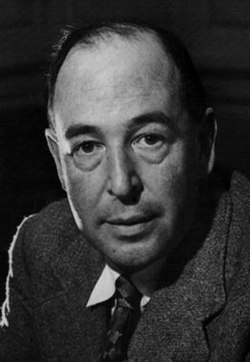
C. S. Lewis, Mastermind.

I wonder when I first heard of C.S.Lewis?

I think it must have been when a friend of mine at school (I'd known her since my first day at primary school, and on through Grammar School and University, before eventually losing touch. Anne Stirling, now Anne Salmon, where are you?) spoke enthusiastically about, and then lent me, The Screwtape Letters. I enjoyed reading it, and began to look out for other books by this author.

For whatever reason, I didn't at first find and read the Narnia series. I am an avid reader of children's books, and have been from my childhood and teens, when this is obviously more normal, on through my twenties, thirties and so on. But I was eighteen before (again) someone lent me The Lion, The Witch and The Wardrobe. I loved it straight away, and bought and read the other six books rapidly.

I love the Narnia books, I even love the slightly distorted films. Well, they're better than many films of well-loved books. And when I take a notion to re-read a children's book from my past these days, although it may be one by Geoffrey Trease, Nancy Breary, Arthur Ransom, or a dozen other favourites, as often as not it's a Narnia book. My special favourites are The Horse and his Boy, The Voyage of the Dawn Treader, and The Silver Chair. Now I come to think about it, these are all books about a journey of adventure (did Enid Blyton write one of her adventure series with that title? I think she did. I always loved her adventure books. Oh, and The Magic Faraway Tree.)

Have you ever thought how much Lewis drew from another firm favourite of mine, E. Nesbit? In the opening of The Magician's Nephew, he says that the story (set back in time from the rest of the series) happened, 'when the Bastables were still seeking for treasure in the Lewisham Road.' Now, there's a clue!

I read an excerpt from The Treasure Seekers by E. Nesbit when I was at Primary School, in a book which included bits from Little Women and Three Men in a Boat, etc. (It's amazing how many of my favourite writers I first heard of in that selection.) After that I searched out Nesbit's books in the Junior Library, finding, first of all, The House of Arden, the first Time Travelling book I ever read, and certainly one of the best. Lewis could have chosen no more evocative, magical opening to The Magician's Nephew than that reference, from my point of view.

But Lewis didn't just write about Narnia. His Christian apologetics are among the best ever written. Simple, witty, straight forward and with a strong logical effectiveness.

Then there are his three Science Fiction novels. The third, in particular, That Hideous Strength, an analysis in strictly fictional terms of the corruption of this age, incorporating the rebirth of Merlin, should rank as one of the best books of its  kind in the 20th century.

And my own particular favourite, a much less well known book, but to me a brilliant one which I read and reread and constantly lend to people (being reconciled to knowing that I'll probably never see that copy again, and will have to buy another. Advice – never lend a book if you're expecting to get it back again!) is The Pilgrim's Regress. Based, obviously, on The Pilgrim's Progress, it concerns the spiritual life of John, who, as well as being C.S.Lewis himself, is a boy born and brought up in Belfast – you can see why I would relate to it! But in addition, this book contains some of Lewis's best poems (or so I think) and this adds enormously to its attraction.

I mentioned (elsewhere) that I once wrote a poem about Narnia, and one about Lewis himself, and I thought I might share them with you guys – why not? I should explain that Lewis hated his first name Clive, and referred to himself, after the age of six, as Jack – and managed to enforce this not only on his friends but on his family! So here goes – I'll be interested to hear if you like these. (But not if you don't!)

Narnia
  
She tumbled out of the wardrobe
Into a crisp fresh world of light
And brought me with her
To where the snow shines bright.

Where grass clad mountains
Tower above lakes of blue
And trees grow toffees
Because the world is new.

Circling animals who chat,
A lamp post grown from an iron bar;
The first joke, and a cabby for king,
In the spring of a world that’s filled with power.

Where horses fly, and talk, and claim
Their freedom from our ownership;
And island upon island grows
Till the lily lake surrounds the ship.

Where Puddleglum drinks too much wine
And always sees the worst to come;
And the hero, strapped to a silver chair,
Speaks the word, no longer dumb.

The stars burnt through the darkness while
I wept for Aslan, weeping for
Myself, afraid to venture through
The only living magic door.


Jack
  
He taught us logic, truth and love
He spoke from both the head and heart.
We learned the wisdom from above
With a sting of wit to make us smart.

He opened casements on the deep
In faery lands beyond the shore,
Dreams that we fail to dream in sleep,
Desires we long for evermore.

He gave us beauty, sweet desire,
Called us on the pilgrimage
Where reason’s sword has set on fire
Our coward hearts made hot with rage.

He brought us to the gates of heaven
But told us we must make our choice
For in that highest place, there, even,
Is still the false, the tempter’s voice.

Fifty years past he crossed the stream,
Came up out of the desert place
Awaking to the real, no dream,
Jack met his Aslan, face to face.


And now, if I may, I'll be cheeky enough to mention, in almost the same breath – my goodness! – my own books, all romantic thrillers about strong minded Belfast girls:


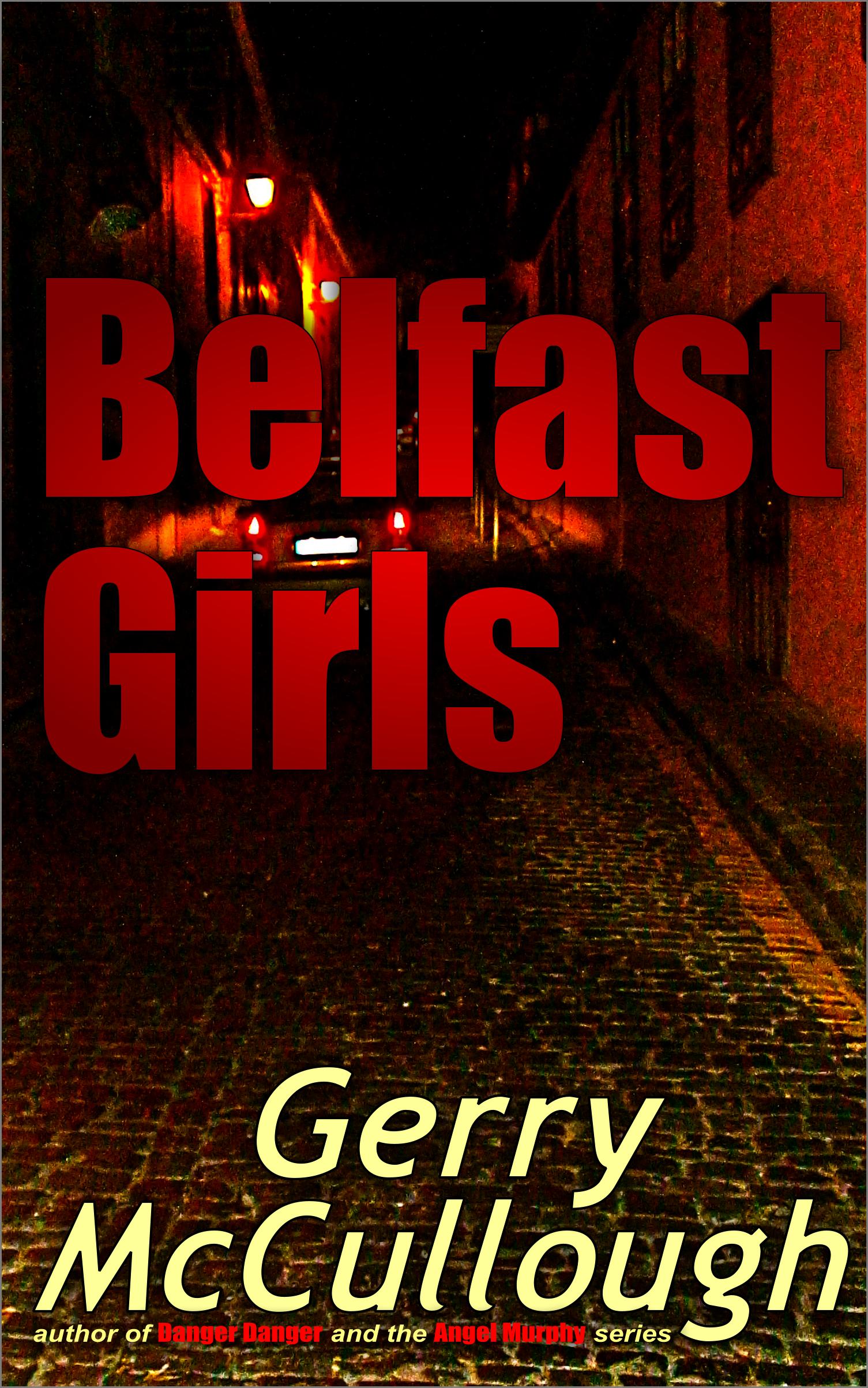
Belfast Girls now has a new publisher and a new link:


                                              http://www.amazon.co.uk/Belfast-Girls/dp/B008J4NISK

Recently, this book has been back in the top 100, for the second time – is it going to knock 50 Shades for 6 sooner or later?


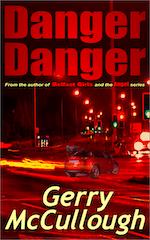
Danger Danger can be bought at:


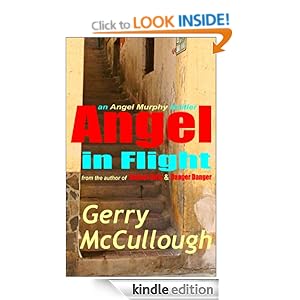
And my new book, Angel in Flight: An Angel Murphy Thriller, is at:


Enjoy!

Friday, 15 June 2012

Three of a Kind

I need to start by apologising to all of you for the really dreadful delay since my last post (which was about Edmund Crispin.) I've been snowed under finishing my new book, Angel in Flight, and editing it for my publisher. But now it's up, and I can relax! Until it's time to start writing the next one – this is the first of a series!


You can buy it here, if you'd like to!


http://www.amazon.com/Angel-Flight-Murphy-thriller-ebook/dp/B0089PPV2K

http://www.amazon.co.uk/Angel-Flight-Murphy-thriller-ebook/dp/B0089PPV2K


I've had it in mind for some time now to write about a number of new books by writers I've recently come across. There are so many, it's really hard to choose which! But here's a selection of new books which I've discovered and thoroughly enjoyed. I think you'll like them too. They are Lallapaloosa, (Rags Daniels) The Blue Hour, (Stephen Hulse) and Mrs Jones (Babs Morton). They are all thrillers – and they may be 3 of a kind, but they have major differences as well. I'm giving you the publisher's description, and then my own view of each.

Lallapaloosa. 

Rags Daniels.

‘October 8, 1967, 'Che' Ernesto Guevara was executed... Or so the world believed…

Richard Strang thought he shared the world's best kept secret with no one. Then one summer evening, the tap of a blind man's cane, and a nose for the toasted Cuban leaf, changed all that.

Now thirty years after the event, a chance encounter with a sinister blind stranger, and the discovery of Che’s final diary pages, causes the past and present to collide and explode into a tale of greed and treachery, survival and revenge.

Inspired by a true sequence of events, ’Lallapaloosa’ tells in flashback the story leading up to the betrayal and 'capture' of the modern world's most famous revolutionary and master of disguise.

Lallapalosa sees author Rags Daniels weave a thrilling tale of deception, danger, and raw-edged adventure that will leave you breathless with excitement and questioning the accepted version of the final days of a man who would become a legend.’


My own view:

This is a book you can't put down. The writing is slick, full of wit and excitement. Daniels has a sharp eye and a great gift for describing what he sees. Settings and characters come vividly to life. The first scene, the darkness, the lights of the town, the smell of the harbour, are beautifully evocative. The tap tap of the blind man's stick, his recognition of Strang, their talk in the pub - all this prepares us in its quick movement for gripping action. But the harsh events which follow are so unexpected and striking that nothing has really prepared us for them. We are left gasping and helpless. We have to read on. The story which follows is original, twisting and turning to its satisfying conclusion. Don't miss this book!


Buy it here:


http://www.amazon.com/Lallapaloosa-ebook/dp/B0086VWPPI


http://www.amazon.co.uk/Lallapaloosa-ebook/dp/B0086VWPPI


Next:

The Blue Hour. 

Stephen Hulse.

' "The French call this time l'heure bleu – The Blue Hour. The time between dawn and sunrise when the sun is below the horizon, and the world is awash with a hazy blue shadowed hue that suspends us between the accepted divisions of light and dark. It should have been beautiful. For me, it was now only beautifully deadly..."

Take one decidedly anti-social alcoholic female British ex-cop with an attitude - Alex Churchill...

Add a tough, no-nonsense enigmatic American Private Eye who isn't quite all he appears - Gideon Wade...

Enmesh them in a dark and deadly web of international intrigue engineered by a shadowy criminal organisation for whom human life is just another commodity to be cynically traded for power and profit...

Then dive for cover as fists fly, blood spills and all hell breaks loose!'


My own view:

This is exactly the sort of book I love reading. The references to Philip Marlowe, etc, as the hero Gideon is introduced, are a key to my preferences. The mention of Chinatown a few chapters later seals the delight. The story is told from the point of view of Alex Churchill, which is both original and fascinating. We are shown the hero – the Marlowe figure – from a female perspective for once – perfect! This story grips from the outset. And although Alex needs Gideon to come on the scene and rescue her from the gang of rapists, she contributes her own skills to their defeat, once she has his help. As we move on into the plot, we are no longer focusing on forties style events. The plot is bang up to date. If you can deal with this, it’s excellently told, with page turning, edge of the seat gripping action, and an enormous, impressive skill in detail. On top of this is the beauty of the descriptions. Gracie the squirrel is a wonderful touch; as is Madeleine, Alex’s mother, and their relationship; and the angel  wings which seem to sprout from Gideon’s back at the appropriate times.
The only thing missing from this book is a reference to the Saint, in the list of the other hard-boiled heroes. (I’ve just been re-reading the series, and realising how good the books are – so much better than the Roger Moore TV programmes!). But that’s a very minor point!
Get this book, read it, and then move on to Shadowchaser – Stephen Hulse is one of the great writers of our times!


Buy it here: 


http://www.amazon.com/Blue-Hour-Churchill-Mysteries-ebook/dp/B007AIPLH2


http://www.amazon.co.uk/Blue-Hour-Churchill-Mysteries-ebook/dp/B007AIPLH2

And thirdly,

Mrs Jones.

Babs Morton.

'A British girl with a secret.
A New York cop with a past.
And a mob that wants revenge

In the slickest, sneakiest twistiest-turniest hard-boiled crime noir novel to come out in a long time, ruggedly pragmatic but honest cop Detective Tommy Connell picks up an English girl, Mrs Jones, who claims to be the witness to a murder, and promptly falls in love with her.

Well, Mrs Jones, whoever she is, must be very attractive because an awful lot of people seem to want to get their hands on her if they can prise her from Connell's determined grasp, including some prominent representatives of organised crime and the Feds.

Detective Connell definitely has his work cut out here if he wants to end up with the body of Mrs Jones, dead or alive, that's for sure.

All-in-all it's probably safe to say he hasn't a clue what is going on. It is probably equally safe to guess that Mrs Jones does.

Not that 'safe' is quite the right word to use here or, there again, maybe it is.'


And again, my own view:

Connell and Lizzie – ‘Mrs Jones’ – don’t get off on quite the right foot. 

‘Honey, is your mum at home?’ he asked the young girl who peered anxiously at him from behind the door. She was slender and pale, with a mop of unruly dark curls and wide dark eyes.’ 

Not what either Connell, or we, the readers, expect. But Lizzie is brighter and stronger than this introduction to her might lead us to expect. The two central characters in this book are way different from the norm. The detective isn’t just the hardboiled cop – and Lizzie isn’t just the slick, sophisticated woman that we’ve met so many times before (and enjoyed meeting, I have to say!). Here is a new twist, not just in the relationships of the main characters, but in the plot; which is slowly, carefully, and enticingly revealed.

I enjoyed reading this book. I enjoyed meeting the characters, I enjoyed working out the plot. I’d be glad to read another Barbara Morton. What else can I say? Go for it!


Buy it here:


http://www.amazon.com/Mrs-Jones-ebook/dp/B006OEVRBM


http://www.amazon.com/Mrs-Jones-ebook/dp/B006OEVRBM

There are lots of really good thrillers coming out on Kindle these days, now that the big publishers can't keep the muzzle on us any more. These are three of my own favourites, and they come highly recommended.


And don't forget my first two books, Belfast Girls, and Danger Danger!  Enjoy!


God bless, and see you soon!


Wednesday, 25 April 2012

Edmund Crispin's Moving Toyshop of Delights


Time for another old favourite  writer.


Edmund Crispin, who was born in 1921 and died in 1978 at the age of 56 was, in my opinion, one of the most intelligent and amusing writers of the twentieth century. I've been reading his detective stories since my early teens and finding more to enjoy in them each time.

I remember coming home from school at the age of twelve or so and finding my mother enjoying a cup of tea with her feet up, a break after her working day as a part-time nurse. She would pour me a cup of tea, offer a Penguin biscuit, ask me about my day, and then go back to reading her book. I would settle in the chair next to hers, nibbling my Penguin and reading with my own feet up. In my memory, quite often my book was an Edmund Crispin.

The trouble with Crispin is that every page has something so funny and witty that you can't help reading it aloud if there's someone else in the room with you. This unpopular trait (they want to get on with their own book) is something I've struggled to overcome all my life. My mother was relatively sympathetic about it, particularly since she enjoyed Crispin too.

Edmund Crispin was a writing prodigy. He had eight books published by the time he was thirty, the first, The Case of the Gilded Fly, written while he was an undergraduate and published when he was either twenty-two or three.(Depending on his birth date, 2 September, and the publication date, which I've never worked out.) Wow, I hear you say. Some going!

Unfortunately then as now books alone don't often bring in a decent living wage, except for the rare best of the best sellers. Crispin wrote reviews, edited collections, and wrote numerous short stories, most of them collected now in book form, over the next two decades.  But he didn't put his creative energy into another full length detective story until he was in his mid fifties. Shortly after it was published, Edmund Crispin died at the early age of fifty-six.

So what was he doing in those two decades? Well, Edmund Crispin's real name was Bruce Montgomery, and as well as a brilliant writer he was an excellent composer of both classical and more popular music under his real name. So the answer to the question is that he was writing very successful music. And music which brought him in a much more than adequate living. He composed many classical pieces which are still played; but also wrote soundtracks for most of the popular British films of that time – the first six Carry On films, the Doctor in the House series, and you name it. Creativity can't be spread too thin. He needed to concentrate mainly on his music, which he took very seriously. So no more books about the fantastic Gervase Fen until nearly the end of his life. Makes you weep, doesn't it? Well, it does if you're a reader rather than a musician.

And now about the books. Crispin's detective, Gervase Fen, is an eccentric Oxford Professor of English Language and Literature. A unique creation. I declare an interest here – I love Fen, so I haven't a critical word to say about him. He's witty, wise, and off the wall. He takes up enthusiasms and drops them again, like his interest in insects in Holy Disorders. He is kind under a surface irascibility. He does what he feels like doing and drags his friends in with him. And he is outstandingly intelligent. He also quotes a lot, which I really enjoy. (Another favourite of mine, Peter Wimsey, does that too.)

Probably the most popular of the books is The Moving Toyshop. It's certainly one of my own favourites. It starts with the poet Richard Cadogan (a take off of Philip Larkin, a close friend of Crispin's since his Oxford days). Cadogan is longing for adventure and trying to squeeze an advance from his publisher in order to go on holiday in Oxford. Once there he stumbles into a toyshop (he finds the door open and feels he should check) and discovers a body. He gets knocked out, comes to and escapes. When he goes back the next morning with the police he finds that the toyshop is no longer there. Instead there is a respectable grocer's shop. So Cadogan goes to his friend Fen for help.

I mustn't give away the plot. Like most detective stories of its period, the plot matters in all Crispin's books and all his plot are marvels of ingenuity. This style of writing isn't so popular now. I'm not sure why. This type of story is meant to be read partly for the pleasure of solving the mystery; a similar pleasure, though much more complex, to the solving of crossword puzzles;  but with all the extra delight of the characters.

However, without spoiling anything I can quote a couple of my own favourite moments. Firstly when a rollicking chase through the streets of Oxford leads to Parson's Pleasure (the part of the river where men are allowed to bathe naked) and two minor villains are thrown into the water.

 'Once immersed, their attitude became conciliatory, largely owing to the fact that they were unable to swim. A science don, who was standing slapping his belly on the bank, regarded them helpfully. "Now is the time to learn," he said. "Bring your body up to a horizontal position and relax the muscles. The surface tension will support you." But they only cried "Help!" more violently...'

Or the opening scene with Richard Cadogan practicing pistol shooting and making his publisher agree to an advance. The publisher suggests,

'Perhaps you'd like to stay with me for a few days at Caxton's Folly?' 
'Can you give me adventure, excitement, lovely women?' 
'These picaresque fancies,' said Mr Spode. 'Of course, there's my wife...'

Cadogan got the money. And Crispin ends the scene,

'So the poet got the better of that affair, as anyone not wholly blinded by prejudice would have expected.'

Then there's the wonderful moment when Fen interrupts a practice of the Handel Society, in pursuit of a witness, and takes it into his head to join in.

'"Professor Fen," said Dr Rains with painful restraint. A hush fell. "You are not, I believe, a member of this choir. That being the case, would you kindly oblige me by going away?" Fen however was not easily abashed...
"I think that's a most illiberal sentiment, Rains," he countered across the gaping tiers of choristers... Just because I happened to make one small error in singing an extremely difficult passage –"' and as they leave presently, '"Now that the English Faculty has left us," Cadogan heard [Dr. Rains] say...'

To me, these are unforgettable moments which can be reread (after a suitable interval) into eternity and beyond.

I also especially like Holy Disorders, possibly because it's one I clearly remember reading during the above mentioned afternoons with my mother; and in fact may well have been the first Crispin I read. The clever title (unlike some clever titles which promise well and produce little) is a fair introduction to the book's contents.

Crispin is not just funny. There are moments in all the books of horror, of high seriousness and of deep exploration of character and life; and these are unusually good and well written  too.

Another favourite of mine is Love Lies Bleeding, set in a boys' boarding school and drawing on Crispin's own few years experience teaching. The setting here is particularly attractive as well as the characters. I choose it as a school prize when I was fifteen, so I suppose the schoolgirl characters, whom I could relate to, were especially interesting to me then – and still are, in fact.

Frequent Hearses is in some ways the most serious of the books. (Although still with some very funny parts.) In it, Inspector Humbleby says to Fen,

'You seem to be a great deal more serious than I remembered.' Fen puts this down to the fact that he's older. 'As I get older,' he explained, 'I get less resilient and more predictable. it depresses me sometimes.'

But if that was really the reason, then what are we to make of his last book, The Glimpses of the Moon? True, there are some very serious bits. But mostly this book is, unlike the eight early novels, a farce from beginning to end, with some amazing characters, some marvellous action scenes, and the wit as always a constant factor. This book was a shock to me when I first read it, because in many ways it's so different from the others. I now think it's one of his best and I enjoy it more each time I read it. The Rector is a brilliant character. He's unashamedly bigoted about his own beliefs as opposed  to the beliefs of the Catholic Church; but in a way which is funny rather than awful. On the last page of the book he goes to Rome and meets the Pope.


' "Not a bad chap at all," was the Rector's verdict on his return, "If only you could hammer some sense about Christian doctrine into his silly noddle".' 

(This book also contains a character called Broderick Thouless who, like Crispin himself, wrote music for the soundtracks of films; so this is a portrait in caricature, if not of Crispin himself , then certainly of his job; which means it's not only very funny but also very interesting to Crispin's admirers.)

The Rector expresses some worries about his own views on the Catholic Church. He would hate to be compared to


'that dreadful fellow in Northern Ireland'.

And this takes us to the final thing I want to say about Crispin.

Edmund Crispin's father, Robert Montgomery, was born and brought up in Belfast, Northern Ireland. In fact, his grandfather William Montgomery came from Bangor, just down the road from where I live. Crispin never forgot his Irish roots, although his father had moved to England and married and settled there by the time Crispin was born in 1921. Crispin made determined efforts to introduce Northern Irish dialect words into the language, using them regularly in his books, such as 'oxter' which means the part of the body under the arm – a much more concise way of saying this when necessary. He and his sisters paid frequent visits to his Northern Irish grandmother; and he always referred to himself as 'Ulster Scots.' (His mother was from Scotland.)

No wonder, with this background, he's such a great writer! (Says she, tongue in cheek!)


And now to another Northern Irish writer. Well, me.


Belfast Girls, since I last blogged, has jumped up into the top hundred overall in Amazon UK, and has been there for over three weeks. I'm very excited, of course.


Danger Danger isn't doing too badly either – top 100 for Romance Suspense and Suspense Thrillers.


                                    http://www.amazon.co.uk/Danger-ebook/dp/B005W7TUQQ


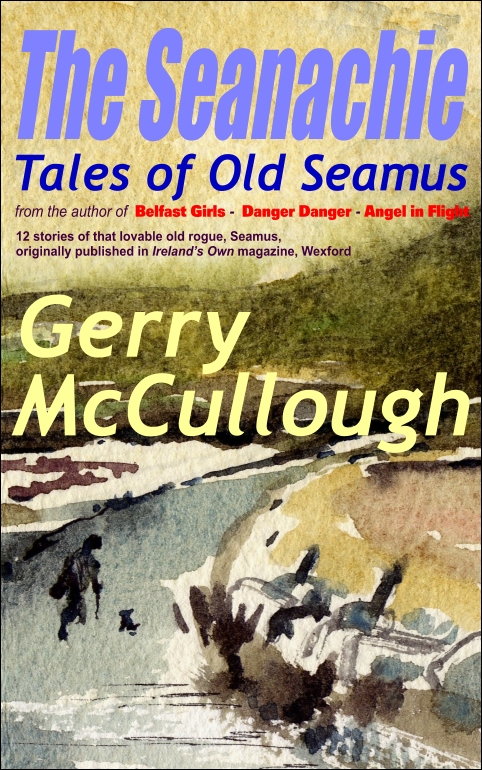
It would be nice to see my short story collection The Seanachie: Tales of Old Seamus catching up with them a bit. It's in the top 20 for books about Ireland, but this is a much smaller category.


http://www.amazon.co.uk/Seanachie-Tales-Old-Seamus-ebook/dp/B006WVI37S


Meanwhile, I'm nearly finished my next Irish romance suspense book, Angel in Flight. Hope to have it out by the end of May or early June. More about that next time.

Goodbye and God Bless!


Wednesday, 28 March 2012

Titanic Tragedy with Melanie Dent; and Cheryl Shireman's Dreams on the lake

In this blog, as regular readers know, I write, turn and turn about, about authors I've known and loved for years; and about my new discoveries. This time round it's the turn of the new writers. Meeting as I do (on the internet) a good many writers, I'm privileged to come across a great many fascinating books. This time I want to draw your attention to two whom I've found very recently, and who, in fact, are very different from each other; Cheryl Shireman who writes the Grace Adams series, Life is But a Dream, and Melanie Dent, who writes the Lynchcliffe series featuring Lewis Franklin. 

First, Cheryl Shireman, and in particular her book Life is But a Dream: On the Lake.
The word which stays with me when I think about this book is ‘powerful.’
Right from the first page, when Cheryl Shireman takes us into Grace’s thoughts, dreams, and dream-memories, she grips. Using a poetic, literary style, she plunges us right into Grace’s psyche, just in the same way that Grace plunges into the swimming pool. And throughout the book she takes time to bring us into the head and soul of each of her major characters as we meet them – Nick, Tony, Bert, Paul.

It’s Cheryl Shireman’s amazing way with words more than anything else that makes her people so alive.  The reader knows so many deep things about each of them in such a short time after she meets them:
the child Grace’s thoughts as she moves slowly nearer and nearer to the pool, unobserved by her mother: ‘She does not see. She does not. See me. See. Me.’;
Nick’s pain as her mother fails to return. ‘When he found her she would ask him, “Quanto tempo ti amo?” And he would pull out the picture and say, “Ti amero sempre.”’ Words repeated with immense emotional effect towards the end of the book;
Grace’s experiences with God, and her feelings; 
and Paul and his child, and his final experience… ‘a little girl was waiting. A beautiful little brown-eyed girl named Julie whose arms stretched toward her Daddy. And Paul had smiled.’

It is these moments and many more like them which make this book so special.

For the first few chapters, I thought I was reading a gentle, moving, literary romance with great characters, a story which focused mainly on the people, their backgrounds, and their interaction.  Halfway through, I woke up and realized that this book is also a thriller full of action, excitement and a terrific climax which seizes us and hurls us along breathlessly. And yet the focus on the characters is basic to the book, too. It’s because Cheryl Shireman has taken the time to build her characters and to allow us to feel for them that the impact of the action is so strong. As Grace rows across the lake our hearts are in our mouths with her. And the dreadful discovery in the cabin closet hits us as surely as it does her, as a further horror almost beyond believing and yet something which has really happened.

The ending is beautifully handled. We really want Grace to be happy. There have been so many possibilities for her, all of them abortive. The final resolution is everything we want for her; and yet it does not seem contrived, or only there to tie up the story nicely. Instead, it seems inevitable, something which couldn’t have worked out in any other way.

The murder plot is deft and agile. There are a satisfactory number of suspects, and enough twists and turns to keep us guessing, but the final solution arises straightforwardly from what we already know about the characters. And when Grace, at the last, turns away from approaching rescue and goes back into the cabin, the little scene, and the repetition of the words ‘Ti amero sempre’ is immensely moving. It is so right that Grace should go back in.

The spiritual element of this book is one other thing, and one of great importance, which makes it different and powerful. Introduced through Irene and Harold, God takes His place as a major character in the story from then on. Grace says at one point that she finds the whole idea of God too confusing. But as things begin to happen, she turns more and more to prayer as a natural response to the need for help, both for herself and for others. The beautiful picture of the sunset and her delight in it is a key point in Grace’s development.

‘The sun slowly slides from the sky, from another day in my life. It meets the water with a languid and silent splash, pulling a riotous mane of color behind. A wild shock of orange and pink is tangled amid tousled blue and purple tresses. Such beauty is overwhelming. Suddenly, it does not matter that I am divorced. It does not matter that Laney is not with me. At that second, that glorious second, all is right with the world.’

And later she and Tony sit quietly watching the wild geese and feeling at peace.

Like me, you will probably find that this book is not what you expected. But you will find it striking, moving, exciting, powerful and very, very readable. Don’t miss out!


You can buy it at these links.
http://www.amazon.com/Life-But-Dream-Series-ebook/dp/B004JU21YU
http://www.amazon.co.uk/Life-But-Dream-Series-ebook/dp/B004JU21YU
And if you're very quick, it's on free offer today, 28 March.
The second book in Cheryl's series Life is But a Dream: In the Mountains can be bought here:
http://www.amazon.com/Life-But-Dream-Mountains-ebook/dp/B00656TWAM
http://www.amazon.co.uk/Life-But-Dream-Mountains-ebook/dp/B00656TWAM


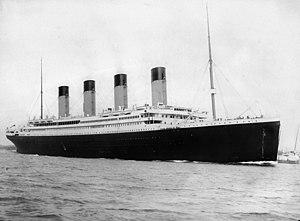
This is the hundredth year anniversary of the sinking of the Titanic, April 1912, a big deal for my native city Belfast where the ship was built and launched, so it's particularly appropriate that I should be writing about Melanie Dent's books at this time. Melanie has now written four books in her Lynchcliffe Series. So far I've read two of them, but that's enough to make me want to read the rest. The
 books are set in the late nineteenth and early twentieth centuries, and the sinking of the Titanic plays a major role in both the books I've read, The Lynchcliffe Cuckoo and Eye of the Storm. In the first book, Lewis Franklin, Dent's brave, upright working class hero, loses his dear nephew and meets the love of his life, and both these things happen because of this tragedy. Set before the first world war with the sinking of the Titanic as a focal plot point, the story moves quickly and grippingly through the socially unacceptable relationship between the 'lady' Margaret Trevelyan and the chauffeur, Lewis Franklin. Starting with the death of Margaret's mother and her adoption by Lord and Lady Trevelyan, the plot takes us by way of Margaret's first meeting with Franklin through the murder of her adopted uncle to the very satisfying ending. The characters are real and likeable where they are meant to be, and the plot is gripping enough to keep any reader turning the pages. Lewis Franklin is a hero whom most women will love, with his Yorkshire accent, his strong and attractive appearance, and his kind, gentle nature. The period setting is a major plus point. It's natural to think of  Downton Abbey. Fans of this very popular series will enjoy The Lynchcliffe Cuckoo, with its full cast of intertwined characters, its setting in a great house, and its timing in the 1912 era. The Eye of the Storm takes us back to Lewis Franklin's earlier life, climaxing in his meeting with Margaret.

 These books are full of action and atmospheric episodes such as Sarah's attempt to support the suffragettes; but above all they are love stories, full of romance (which, by the way, Dent handles with adult detail. These books are not intended for children.)

 Since The Eye of the Storm is a prequel, most readers will approach it already knowing how things work out for Lewis Franklin. And that's just as well, for Lewis goes through some very bad times, including a beating up by an early 'protection gang.' There are some beautiful descriptive passages, such as, 'death had accentuated her frailty,' said of Lewis's little sister at her funeral at the beginning of The Eye of the Storm.

Unlike Cheryl Shireman's heroine, Melanie Dent's hero rages at God for the things which happen to him. As a believer myself (something which everyone who's read anything I've written must know), I find this difference fascinating. It will be interesting to see if Lewis works his way through this problem as the books continue.
  
And as it happens two of the books, Divided Loyalties: Lady Lynchcliffe's Story and The Enemy Within are on free offer this weekend (31 March and 1 April) so here are three free books you heard about here – how's that for service?

And of course my own book, Danger Danger is also free today, 28 March. Second time around. The first was amazingly successful. I'll be interested for future reference to see if a second go works or not.  This is a complete learning curve for most of us! 

 And as I write (type) Belfast Girls is heading at top speed for the 100 bestsellers ranking on AmazonUK – hard to believe! Currently #147 – interesting to see if it moves on up or not. No promos here, just a year and a bit of being around.
Buy my books ( ah, go on, go on!) here;
http://www.amazon.co.uk/Belfast-Girls/dp/B004DNWS3W 
http://www.amazon.com/Belfast-Girls-ebook/dp/B004DNWS3W 


http://www.amazon.com/Danger-ebook/dp/B005W7TUQQ

http://www.amazon.co.uk/Danger-ebook/dp/B005W7TUQQ 


http://www.amazon.co.uk/Seanachie-Tales-Old-Seamus ebook/dp/B006WVI37S

http://www.amazon.com/Seanachie-Tales-Old-Seamus-ebook/dp/B006WVI37S

And don't forget Old Seamus!


See you soon!

Thursday, 8 March 2012

Robert B. Parker and the Mean Streets.

The Man Himself – Robert B.Parker

Sorry this blog has been so long in coming. I've been having quite an exciting time recently. As most of you probably noticed, my second book, Danger Danger (a romantic thriller on the lines of my first, Belfast Girls) was on free promo on Kindle on 1 and 2 March.

Nearly 20,000 people downloaded the free copy, and then when it stopped being free after two days, people started buying it, also in thousands. I was certain I was dreaming and would soon wake up!

The book shot up to #1 overall in Kindle UK Free and #16 overall in Kindle USA Free. And now it's sitting comfortably in the top 100 UK paid, and the top 1000 USA paid, with #1 rankings in its genres! Is this really happening, guys?

The knock on effect is that lots more people than usual have been buying Belfast Girls too, and also my short story collection, The Seanachie. The Seanachie will be on free promo on 15 and 16 March, just before St Patrick's day – be interesting to see if the same sort of thing happens to it!

Meanwhile, my husband Raymond's very interesting non fiction book, which examines prophecies relating to modern day America and the Middle East, will be free on 12 and 13 March. A very different type of book, but on a subject which many find fascinating. Interesting, again, to compare results. Are all Kindle free downloaders looking for thrillers  or romance? Surely not?

So, as the man said, 'I've talked long enough about myself. So, changing the subject, what do you think of me?'  Moving on, then.

Whenever one of my favourite writers dies, I'm always sad. Not just because there'll be no more of their books to read, but because I feel as if I'd lost a friend. I can remember the shock back in 1975 when three of my favourites, PG Wodehouse, Agatha Christie and Georgette Heyer all died in the same year.

Recently there's been another spate of deaths of good writers whom I love. Not all in the same year, but close enough, we've lost Michael Gilbert, Gavin Lyall, and just over a year ago, Robert B. Parker.

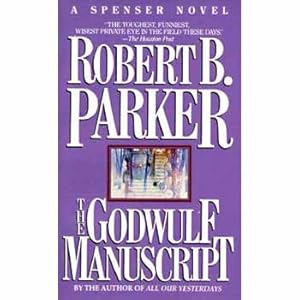
Parker is someone I came across as an adult, in fact when I was already married (although there isn't much difference between those two identifiers, time-wise). My sister (as often happens) first introduced me to him by lending me his first book,The Godwulf Manuscript.

I enjoyed the book very much. But my first reaction was to say, 'This is a bit of a copy of Raymond Chandler writing about Philip Marlowe.'  And undoubtedly, as Parker himself was the first to admit, there is a strong Chandler influence, especially in the first books. Spenser is a witty, sophisticated, moral (in his own individual way), highly intelligent man, already mature in The Godwulf Manuscript – very like Marlowe. However, as I continued to read the books with ever increasing pleasure, I found to my delight that Parker's detective Spenser was rapidly developing as a character in his own right. All but the faint influence of Chandler was left behind, and as the relationship between Spenser and Susan became more complex and interesting, the books became one of my chief reading enjoyments.

On the back cover of some of the books is a quote from a New York Times reviewer which seems to me to sum up the early Spenser (up until A Catskill Eagle, which marks a turning point).

'Tough, wisecracking, unafraid, lonely, unexpectedly literate – in many respects the very exemplar of the species.' 


You can see why I love him.

Chandler said of Marlowe that he dealt with crime in the mean inner city streets. 'Down these mean streets a man must go who is not himself mean.' The attraction of Marlowe, and later Spenser, is that although he's no angel, especially in his relationships with women, he cares passionately about fighting evil in the shape of the crimes he comes up against, and makes us care too. This moral stance is basic to Marlowe's character.  Spenser also has a firm moral stance (except with women) but as the books go on, starting in fact as early as Mortal Stakes, he needs to define and perhaps change his ideas of right and wrong in the particular circumstances which he finds himself in.

The character of Hawk, first introduced in Promised Land and developed in The Judas Goat, is important to the books. He is, in a sense, Spenser's mirror image -– tough, strong, individual, unhampered by rules which he doesn't accept – but without Spenser's moral viewpoint. Hawk several times points out that Spenser could solve a problem by killing or even torturing the baddie. This is unacceptable to Spenser and, I suppose, to most readers, certainly to me.

Spenser is very clear about what he finds acceptable. Parker is clever enough to retain our affection for Hawk by never showing him actually going to these extremes – well, not torture, anyway. Spenser (with the author's help, of course) is intelligent enough to solve his problems without sacrificing his own moral stance, except when occasionally he needs to argue it out with himself and, later, Susan, and decide that he has to go for the lesser of two evils.

It's this sort of thing which makes the books fascinating; although the fast moving plots full of action and twists and turns certainly make a major contribution to their readability.

Since I started reading the books, I've found several times that a mention of Spenser to someone who already knows and likes the books is enough to start up a lifetime friendship. Most recently, talking to a well known crime writer, I commented on the Christian name he'd given his character as not being what I would have thought the most appropriate, and was told, 'Oh, that was my editor's idea. Originally, he didn't have a first name.'

'Just like Spenser,' I said. 'Oh, I'm sure you won't have heard of him – hardly anyone I mention him to has. An American detective series I love.'

And got the answer, 'Spenser! I love him! I read him all through my teens! It was because of reading him that I didn't give my character a Christian name, at first!'

Instant relationship.

And apparently someone else fell in love with me from the moment I mentioned Spenser at a friend's party, and we spent the rest of  the evening on a sofa discussing the books. We both thought Early Autumn was one of his best.

The earlier Spensers are still my favourites. When he reached A Catskill Eagle, Parker  introduced an element of unreality which wasn't, I think, just so successful. However, having said that, there are still some stunning books written after that, such as Small Vices. Everyone who reads Parker will have their own favourites. There isn't one which isn't readable. My personal gauge for an author's books is, 'If I read this before I'd read any other books by this writer and had nothing to compare it to, would I want to read their other books?' With Parker, the answer would always be a resounding, 'Yes!'

With Spenser well established (a TV series which you may or may not have seen to his name – a dreadful Susan, a not very good Spenser, too young looking, and a not too bad Hawk) Parker moved on to a female central character, Sonny Randall, similar to VI , Kinsey, and others but none the worse for that; and a third person protagonist, Jesse Stone, a recovering alcoholic with an on/off relationship with his ex-wife. Sonny and Jesse each have their own series.  I'm not saying these aren't good books. They are. My husband likes Jesse Stone much more than I do.

But to me, Spenser remains Parker's main achievement.

If you haven't read him yet, you've been missing some great books.

If you have read him, I'd love to hear your comments – which ones do you like best, etc?

And in closing, you can buy my three books for Kindle (there are also paperbacks of Belfast Girls and Danger Danger) at the links below:


http://www.amazon.co.uk/Danger-ebook/dp/B005W7TUQQ


Please don't hesitate!


Be back soon!

Friday, 10 February 2012

Night Publishing Leaps Forward: Tim Roux and Drew Cross


As my regular readers will know by now, I indulge myself in this blog by writing about the many books which are my old favourites, the ones which I read and re-read, and I feel, as I write, as if I'm talking to old friends who like the same sort of books as me.

But in between this, I like to discuss books which I've only come across recently and which I've really liked; and in those cases I feel like someone trying to lend a book which they've recently found to a friend who has never heard of it before. 'Go on, take it – I know you'll really enjoy it. But mind, be sure to give me it back!'

(I've long since stopped lending books to friends, I may say – I've lost too many that way. I still recommend them – but my friends now need to go out and buy their own copies – I'm hanging on to mine.)

My last blog was about Jane Austen. So this blog, in the usual sequence, is about two writers, and in particular two books, that I've discovered during the past few months.

The first is Tim Roux's book, previously The Dance of the Pheasodile, now re-published as Harry Walker's Wife.  Tim Roux operates Night Publishing, which published my first book Belfast Girls. So is there something suspicious in the fact that I'm recommending my publisher's own books? Well, no. My second and third books, Danger Danger and The Seanachie: Tales of Old Seamus are published by Precious Oil Publications, which is run by my husband Raymond McCullough. If I wanted to curry favour with my current publisher, I would be recommending Raymond's book, The Whore and Her Mother (a non-fiction look at prophecy about coming events).

As a matter of fact, I did mention it on a recent blog, but only because I really think it's worth reading. If I wanted to curry favour with my husband, there are other ways I could do it. (I mean, of course, like cooking him a particularly nice meal.)

So in looking at Tim Roux's book (which by the way is only one of his many excellent novels) I can honestly claim to be completely impartial.

Harry Walker's Wife is the story of Keith McGuire, who goes for a Hypnotherapy session to help him deal with his past, and comes to himself in the body of someone called Harry Walker, an unpleasant, crooked man, the opposite of Keith in every way. Meanwhile, Harry is living in Keith's body. The two men find themselves forced to live each other's lives, including living with each other's wives – a moral problem for Keith if not for Harry.

This is one of those books which make you want to kick yourself for not reading it sooner. Pressure of work prevented me reading Harry Walker’s Wife when I first got my hands on it, and how stupid was that? As soon as I started the book, I was gripped. I read it in one sitting when I should have been buying/wrapping Christmas presents (about two days before Christmas, I mean) and I felt that I had made a discovery.

Tim Roux is an author whose name should be known throughout the reading world. He is a skilled writer, able to move, amuse, thrill and terrify within a few sentences. His characters are likeable when he means them to be likeable, even when they end up doing unlikable things. And his plot -wow! I spent most of the book wondering how on earth he was going to resolve this fantastic situation without using the old cop-out, 'And then Keith woke up.' But not a bit of it. Mr Roux is not afraid to tackle the incredible and make it believable, and he resolves his plot in a way which is truly satisfying.

Tim Roux gives us a new twist on previous books with this type of subject (like Vice Versa by F. Anstey or Laughing Gas by PG Wodehouse, to say nothing of films like Big). This is not a straight body swop. Part of the iniquitous Harry Walker remains, sharing his own body with its new inhabitant, Keith, and encouraging him to do things Keith would never have done. So Keith, recovering his own body and life, is faced with a moral problem – did he do some of those evil things, or can he put the blame on Harry? Fascinating.

But the most obviously striking thing about this book is the speed with which the plot moves along, and the page turning skill with which Tim Roux keeps us gripped and impelled to read more.

I love this book. I think millions should be reading it. And I think Mr Roux should put some of the time, and the skills he now has, which he uses in publishing and publicising other writers' books, into pushing this one – and then we'll see what we will see!

Very warmly recommended. And currently it's free for your Kindle or Kindle app at these links:
http://www.amazon.com/Harry-Walkers-Wife-ebook/dp/B0076OL6DS/

http://www.amazon.co.uk/Harry-Walkers-Wife-ebook/dp/B0076OL6DS


One of those books, published by Tim at Night Publishing, is Drew Cross's Bite Marks. Not, as its author finds himself constantly explaining, a vampire story, but rather the story of a cop tracking a serial killer with strange tendencies.


This is another book which I read in one sitting. 


Drew Cross is a writer whose lyrical style shines forth from every page.

'The air is cobalt with scents of clean running water and the zigzag memories of dragonfly wings; the sun, a blazing heaven, dots tan speckles on lithe young limbs.' 

This is only one of the thousands of lines which are not only sheer poetry in themselves, but which carry the exact atmosphere which the author wants. In this particular scene,it's the memory of the original innocence of childhood. In others, the poetry conveys to us pain, guilt, or loneliness.


This is a gripping, page turning thriller which also deals marvellously with the damaged human condition, the scars of childhood, the generational hurts passed on unless they are deliberately cut off. There is only one writer I can think of who uses the crime story to do so much exploration of the human psyche, and that is Graham Greene. I consider that Drew Cross fully deserves to be placed beside Greene – who is acknowledged as one of the great writers of the twentieth century. 

Recently I watched the film of Brighton Rock on TV again, and was reminded how skilful Greene is at giving us a gripping, thrilling crime story, while making us aware of the underlying depths of life as a part of his story, rather than something imposed on it.
 It's not too much to say that Drew Cross does something similar.

One reason why this book Bite Marks works so well simply as a crime story is the skill with which the writer tells us only enough to keep us guessing, enough to make us eager to find out what is actually going on. What is Shane Marks haunted by? What is he trying to conceal? Is he, or is he not, himself the 'monster'? And will he succeed in leaving behind his past, and forging new relationships, with his cop partner Marcus or with Karen?

It's only towards the very end of the book that these things become clear. Meanwhile they tantalise us, and pull us on to read further. But we want to know, not just the solution to the crimes, but who this man is who is at the centre of the story, this man Shane Marks. 


Drew Cross is someone we will be hearing much more about. As they used to say, 'He writes like an angel.' He also gives us a tight plot, and his characters have everything needed in the way of depth and reality. 
I'll be reading this book again, many times. You can buy it for your Kindle here:
http://www.amazon.co.uk/BiteMarks-ebook/dp/B004WE7RIS

Meanwhile, are you one of the nearly 3,000 people who've bought and read Belfast Girls? (Currently at #4 in the Amazon Women's Literary Fiction genre.) If you are, then have you tried my second Irish romantic thriller, Danger Danger? Or my lighter short story collection The Seanachie: Tales of Old Seamus? You can buy them for buttons at these links.

http://www.amazon.co.uk/Belfast-Girls/dp/B004DNWS3W      

Or for slightly more as paperbacks.

Enjoy!

See you again soon. Love and God Bless, Gerry