The Man Himself – Robert B.Parker
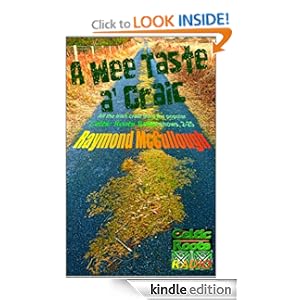
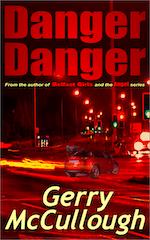 Nearly 20,000 people downloaded the free copy, and then when it stopped being free after two days, people started buying it, also in thousands. I was certain I was dreaming and would soon wake up!
The book shot up to #1 overall in Kindle UK Free and #16 overall in Kindle USA Free. And now it's sitting comfortably in the top 100 UK paid, and the top 1000 USA paid, with #1 rankings in its genres! Is this really happening, guys?
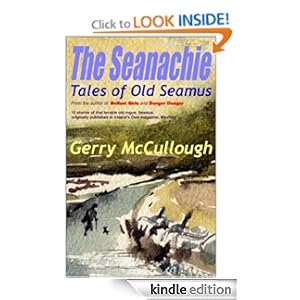
The knock on effect is that lots more people than usual have been buying Belfast Girls too, and also my short story collection, The Seanachie. The Seanachie will be on free promo on 15 and 16 March, just before St Patrick's day – be interesting to see if the same sort of thing happens to it!

So, as the man said, 'I've talked long enough about myself. So, changing the subject, what do you think of me?' Moving on, then.
Whenever one of my favourite writers dies, I'm always sad. Not just because there'll be no more of their books to read, but because I feel as if I'd lost a friend. I can remember the shock back in 1975 when three of my favourites, PG Wodehouse, Agatha Christie and Georgette Heyer all died in the same year.
Recently there's been another spate of deaths of good writers whom I love. Not all in the same year, but close enough, we've lost Michael Gilbert, Gavin Lyall, and just over a year ago, Robert B. Parker.
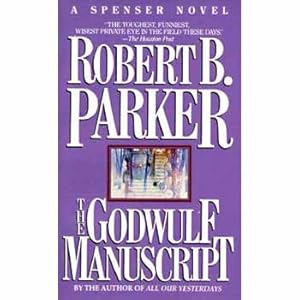
I enjoyed the book very much. But my first reaction was to say, 'This is a bit of a copy of Raymond Chandler writing about Philip Marlowe.' And undoubtedly, as Parker himself was the first to admit, there is a strong Chandler influence, especially in the first books. Spenser is a witty, sophisticated, moral (in his own individual way), highly intelligent man, already mature in The Godwulf Manuscript – very like Marlowe. However, as I continued to read the books with ever increasing pleasure, I found to my delight that Parker's detective Spenser was rapidly developing as a character in his own right. All but the faint influence of Chandler was left behind, and as the relationship between Spenser and Susan became more complex and interesting, the books became one of my chief reading enjoyments.
On the back cover of some of the books is a quote from a New York Times reviewer which seems to me to sum up the early Spenser (up until A Catskill Eagle, which marks a turning point).
'Tough, wisecracking, unafraid, lonely, unexpectedly literate – in many respects the very exemplar of the species.'
You can see why I love him.
Chandler said of Marlowe that he dealt with crime in the mean inner city streets. 'Down these mean streets a man must go who is not himself mean.' The attraction of Marlowe, and later Spenser, is that although he's no angel, especially in his relationships with women, he cares passionately about fighting evil in the shape of the crimes he comes up against, and makes us care too. This moral stance is basic to Marlowe's character. Spenser also has a firm moral stance (except with women) but as the books go on, starting in fact as early as Mortal Stakes, he needs to define and perhaps change his ideas of right and wrong in the particular circumstances which he finds himself in.

Spenser is very clear about what he finds acceptable. Parker is clever enough to retain our affection for Hawk by never showing him actually going to these extremes – well, not torture, anyway. Spenser (with the author's help, of course) is intelligent enough to solve his problems without sacrificing his own moral stance, except when occasionally he needs to argue it out with himself and, later, Susan, and decide that he has to go for the lesser of two evils.
It's this sort of thing which makes the books fascinating; although the fast moving plots full of action and twists and turns certainly make a major contribution to their readability.
Since I started reading the books, I've found several times that a mention of Spenser to someone who already knows and likes the books is enough to start up a lifetime friendship. Most recently, talking to a well known crime writer, I commented on the Christian name he'd given his character as not being what I would have thought the most appropriate, and was told, 'Oh, that was my editor's idea. Originally, he didn't have a first name.'
'Just like Spenser,' I said. 'Oh, I'm sure you won't have heard of him – hardly anyone I mention him to has. An American detective series I love.'
And got the answer, 'Spenser! I love him! I read him all through my teens! It was because of reading him that I didn't give my character a Christian name, at first!'
Instant relationship.

The earlier Spensers are still my favourites. When he reached A Catskill Eagle, Parker introduced an element of unreality which wasn't, I think, just so successful. However, having said that, there are still some stunning books written after that, such as Small Vices. Everyone who reads Parker will have their own favourites. There isn't one which isn't readable. My personal gauge for an author's books is, 'If I read this before I'd read any other books by this writer and had nothing to compare it to, would I want to read their other books?' With Parker, the answer would always be a resounding, 'Yes!'
With Spenser well established (a TV series which you may or may not have seen to his name – a dreadful Susan, a not very good Spenser, too young looking, and a not too bad Hawk) Parker moved on to a female central character, Sonny Randall, similar to VI , Kinsey, and others but none the worse for that; and a third person protagonist, Jesse Stone, a recovering alcoholic with an on/off relationship with his ex-wife. Sonny and Jesse each have their own series. I'm not saying these aren't good books. They are. My husband likes Jesse Stone much more than I do.
But to me, Spenser remains Parker's main achievement.
If you haven't read him yet, you've been missing some great books.
If you have read him, I'd love to hear your comments – which ones do you like best, etc?
And in closing, you can buy my three books for Kindle (there are also paperbacks of Belfast Girls and Danger Danger) at the links below:
http://www.amazon.co.uk/Danger-ebook/dp/B005W7TUQQ
Please don't hesitate!
Be back soon!